cities
struggles
ideas
always... →
one journal ↴
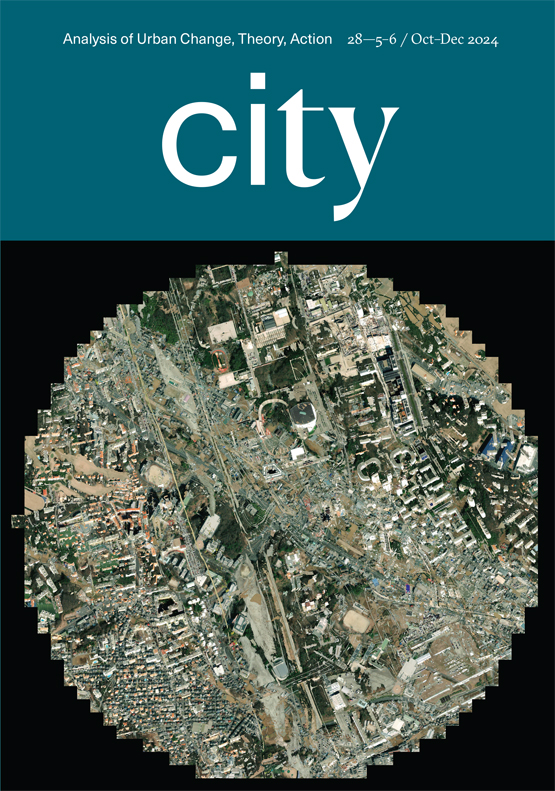
city: issue 28.5-6
founding editor: bob caterrall
editor: city editors
editorial: Cities, computation and capitalism
alexander tarr
… Metropolis. Great movie. Exactly the world Pökler and evidently quite a few others were dreaming about those days, a Corporate City-state where technology was the source of power, the engineer worked closely with the administrator, the masses labored unseen far underground, and ultimate power lay with a single leader at the top, fatherly and benevolent and just, who wore magnificent-looking suits … (Thomas Pynchon, Gravity’s Rainbow, 1973, 673)
As I write, over seventy million citizens of the United States have just reelected Donald Trump as their President, along with a cabal of his supporters into all levels of American government. The global ramifications of their return to power threaten to be catastrophic, from hobbling environmental policies meant to save cities from the worst impacts of climate change to nightmarish immigration policies. The post-mortems on what went wrong to put the world’s most infamous, criminal real estate developer back in charge of the world’s largest economy will be arriving for years to come. This piece is not one of them, but others will surely dwell on the explosion of misinformation spread through seemingly uncontrollable digital networks, an attendant culture of grievance, and the specific roles played by the arch-tech-billionaires Elon Musk and Peter Thiel. There is still something incomprehensible, in the literal sense that we do not yet have concepts to comprehend, the assemblage of networked computer technologies, far-right populism, and a new class of corporate owners at the top of the power structure. Incomprehensible, but not surprising.
The first digital computers to emerge at the end of World War II had the processing power of around 1/500,000th of a modern smartphone and were primarily used at first to design weapons for mass murder. In the present moment, as untold breathless articles have begun in recent years, the companies and individuals who own and control systems built on networked computational devices increasingly appear as the most powerful forces shaping everything from the global economy to political systems to the daily lives of everyone on the planet. The analysis of what could generally be called the ‘digital revolution’ over the last 70 years is overflowing with hot takes, mixed metaphors, and what Andrew Sayer (1992) might call ‘bad abstractions’ or ‘chaotic concepts’: terms like ‘High-tech’, ‘Big Tech’, ‘Silicon Valley’, ‘Platforms’, and ‘Stacks’, that fail to recognize necessary relationships. The proliferation of these concepts suggests a sense that the analytic frameworks developed under the entwined systems of capitalism and colonialism may no longer be fit for purpose thanks to the power of networked computers. Indeed, there is a growing debate on the left over whether we still live under Capitalism at all. As McKenzie Wark (2021) asks us, ‘capital is dead, is this something worse?’ The question has profound implications for urban studies as well. We might ask in return ‘if capitalism is dead, what is a post-capitalist city?’
Much of what we understand about urbanism is based on cities in relation to a capitalist mode of production, and all that its historical development entailed. Capitalism has not been the only global system, certainly a great deal of work in this and other urban journals engages with the complexities of post-colonial and post-socialist cities. We have robust debates over the extent to which transformations of those political-economic systems reshape urban life. Post-capitalist cities, however, largely remain in the realm of the speculative, hopeful and, occasionally, prescriptive futures. If we take Wark’s, and others’, assertion that capitalism as we know it has been killed by a digital revolution (akin here to ‘the industrial revolution’), what does it mean to be living in post-capitalist cities? They are clearly not the green utopias that we have dreamed of. Has computation actually killed the capitalist city? It may not yet be an answerable question. However, there is a need at this moment for a mode of research, thinking and organizing that bridges the gap between high-level theories of social transformation and the grounded studies of how the uses of digital technologies are (or are not) changing lived urban conditions. Here, I suggest looking to the debate on the transformative effect of a digitally-oriented economy, and then, to what these developing socio-technical systems mean for urban spaces.
One brief note on terminology before proceeding. Digital urban studies must often think with terms like ‘big data’ and ‘tech companies’, but the underlying relations they describe can become mystified through repetition. I am intentionally using the somewhat unwieldy term ‘networked computation’ throughout as a shorthand for the interwoven socio-technical systems that includes the producers of software (i.e. computer programs, apps, platforms, data processing tools, artificial intelligences, network protocols and encryption tools) and hardware (i.e personal computers, mobile devices, servers, network infrastructure, sensors, weapons, drones, biomedical devices) and their countless uses in cities (see Figure 1). This is to suggest a more fundamental abstraction that points toward what is both unique and unifying in a long digital revolution.
journal article
abstract / preview
Abstract
What is the value in an empty home? A perspective from Action on Empty Homes and the Global Empty Homes Network
No abstract available yet for this article.
abstract / preview
Abstract
Community action, counter-professionals and radical planning in the UK
No abstract available yet for this article.
abstract / preview
Abstract
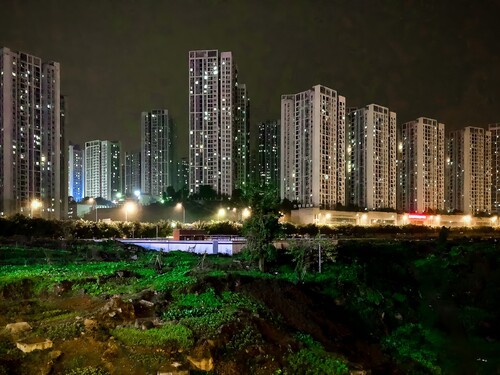
The emerging peri-urban landscape of modern public rental housing towers in China: a case of Chongqing
No abstract available yet for this article.

abstract / preview
Abstract
Resisting dark tourism: Northern Cyprus’s ‘ghost city’ of Varosha
No abstract available yet for this article.
abstract / preview
Abstract
Cities, computation and capitalism
No abstract available yet for this article.
abstract / preview
Abstract
It is ‘more than just about building houses’: collaborating towards a housing commons in Leeds
No abstract available yet for this article.
abstract / preview
Abstract
Making the state care: the role of political willingness and brokerage in Bogota’s new feminist care policy
No abstract available yet for this article.
abstract / preview
Abstract
Version city: Small Axe , London and the archive
No abstract available yet for this article.
abstract / preview
Abstract
From the sthala purana to the novel: Sethu’s The Saga of Muziris as a narrative geography of the ancient Indian port city of Muziris
No abstract available yet for this article.
no space to share. challenges of accommodating grassroots initiatives in sustainable urban districts
abstract / preview
Abstract
No space to share. Challenges of accommodating grassroots initiatives in sustainable urban districts
No abstract available yet for this article.
abstract / preview
Abstract
Ecology of urban decay. Unintentional landscapes of enhanced biodiversity in Rome
No abstract available yet for this article.
abstract / preview
Abstract
‘They’re not dog friendly because they’re not anyone friendly’: living with dogs in two densifying London neighbourhoods
No abstract available yet for this article.
abstract / preview
Abstract
Representing London: making and claiming the city
No abstract available yet for this article.
abstract / preview
Abstract
Human sensors in the city of super apps: mobilizing people as infrastructure for smart city development in Jakarta, Indonesia
No abstract available yet for this article.
abstract / preview
Abstract
The production of information space in the port of Piraeus: digital logistical media, power mutations and state transformations
No abstract available yet for this article.
abstract / preview
Abstract
A new urbanity in a suburban region: the perceived (im)possibilities of light rail among residents and stakeholders in Canada’s Waterloo Region
No abstract available yet for this article.
abstract / preview
Abstract
Flânerie, virtual-mobilized gaze and urban experience in Abbas Kirasotami’s The Experience (1973)
No abstract available yet for this article.
abstract / preview
Abstract
Comparison and community engagement: post-politics meets post-colony and state entrepreneurialism. Introduction to the special feature
No abstract available yet for this article.
abstract / preview
Abstract
The Grand Union Alliance: community-based networking as response to large-scale urban development
No abstract available yet for this article.
abstract / preview
Abstract
Planned stitching , practical suturing : assembling community voices and mobilisation across difference in Johannesburg’s corridors of freedom
No abstract available yet for this article.
abstract / preview
Abstract
Mobilising in the face of large-scale urban change: a conversation between two community organisers from Johannesburg and London
No abstract available yet for this article.
abstract / preview
Abstract
Towards the desired city of compromise: the politics of negotiating large-scale transformation across diversity in Johannesburg
No abstract available yet for this article.
abstract / preview
Abstract
Settings of community engagement: beyond the Janus-faced post-political in ‘neoliberalised’ London
No abstract available yet for this article.
abstract / preview
Abstract
Bargaining state-society relationships under state entrepreneurialism: community engagement beyond the resettlement process in Shanghai
No abstract available yet for this article.
abstract / preview
Abstract
Navigating the ‘straight state’
No abstract available yet for this article.
abstract / preview
Abstract
The violences and fictions of school choice
No abstract available yet for this article.
abstract / preview
Abstract
Navigating patriarchal transit: urban spaces and everyday morality in the ‘City of Men’
No abstract available yet for this article.