this essay examines the contemporary significance of the rec comtal, a millennium-old canal that once served as a major water infrastructure in barcelona. following its functional decline in the 20th century, the rec has recently resurfaced in various domains—including archaeology, urban planning, and grassroots activism—becoming a site of contested meanings and future imaginaries. through four ethnographic ‘scenes’ located along the canal’s path, we examine how the rec has been re-signified as official heritage, future green infrastructure, common resource, and space of unsanctioned leisure. rather than a relic of the past, the rec emerges as a dynamic infrastructure through which multiple, and often conflicting, visions of the city’s history, governance, ecology, and future aspirations are channeled.
Keywords:
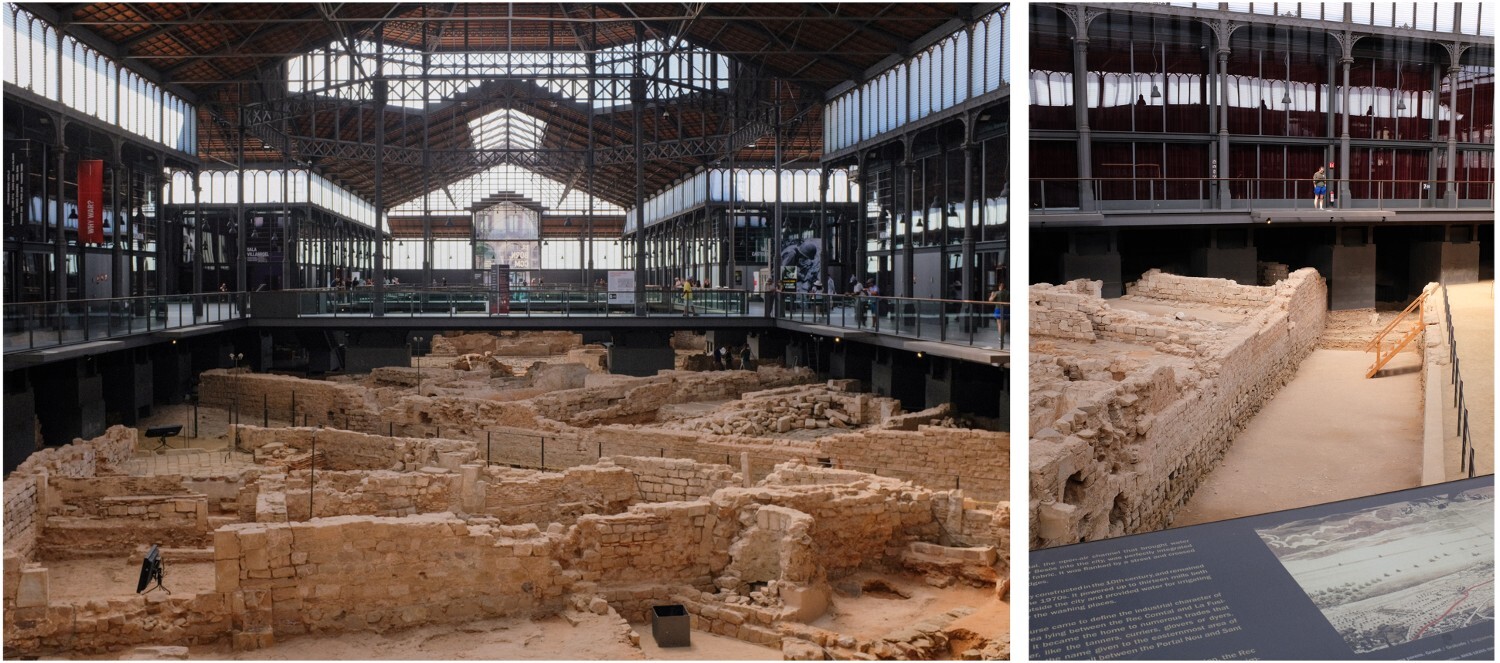
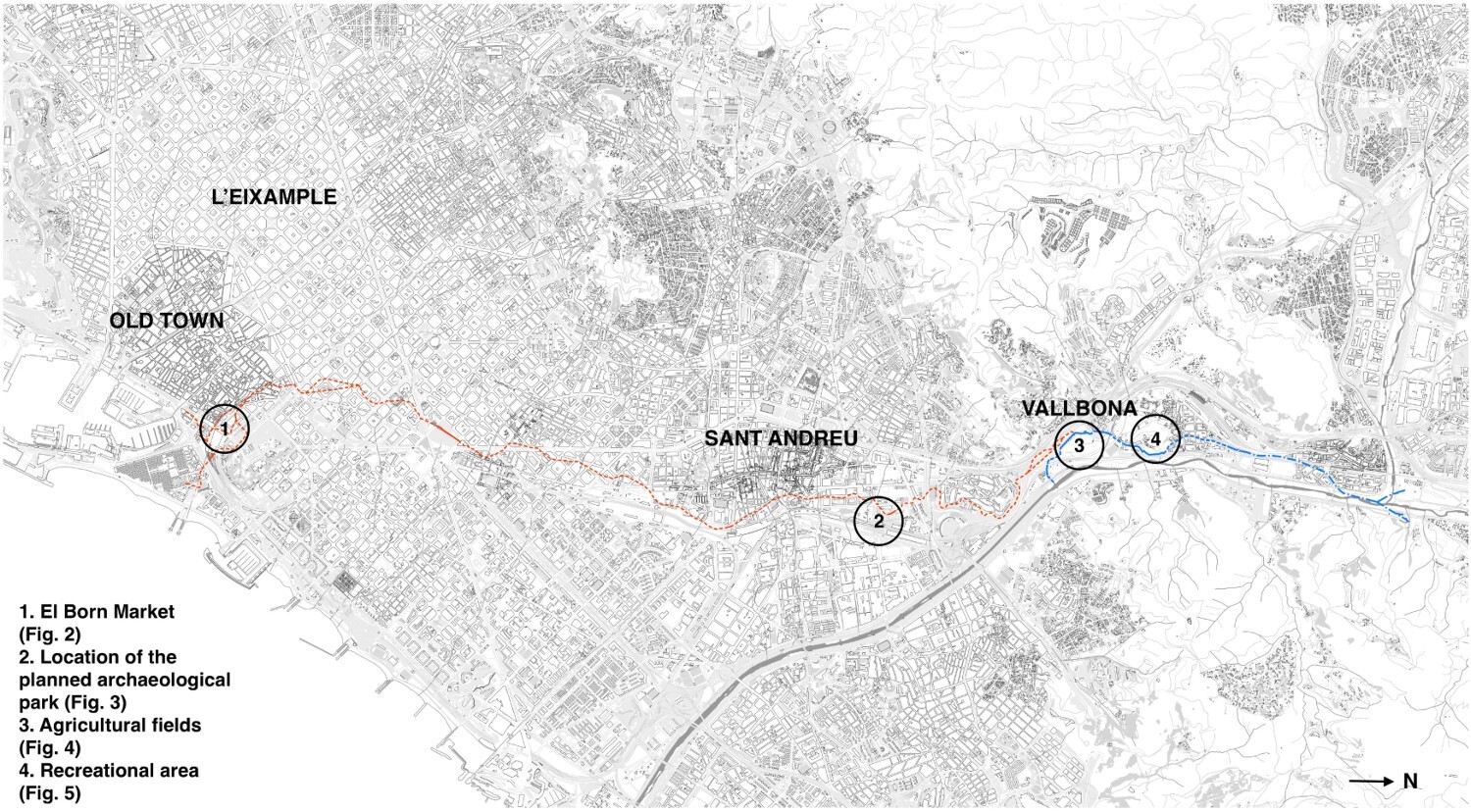
el rec comtal (‘the count’s canal’, henceforth the rec) has provided water to barcelona’s fields, industries and people for over a thousand years. it goes from the city’s northern hills to the old town and the mediterranean sea, following the path of the roman aqueduct and a moorish channel. the rec was an important resource for barcelona until the city’s modernisation in the 20th century, when the implementation of the new urban grid (l’eixample) resulted in its replacement by newer infrastructures. only a small section in barcelona’s northern periphery continued to carry water (supporting agrarian and recreational uses), while most of the canal ended up buried underground.
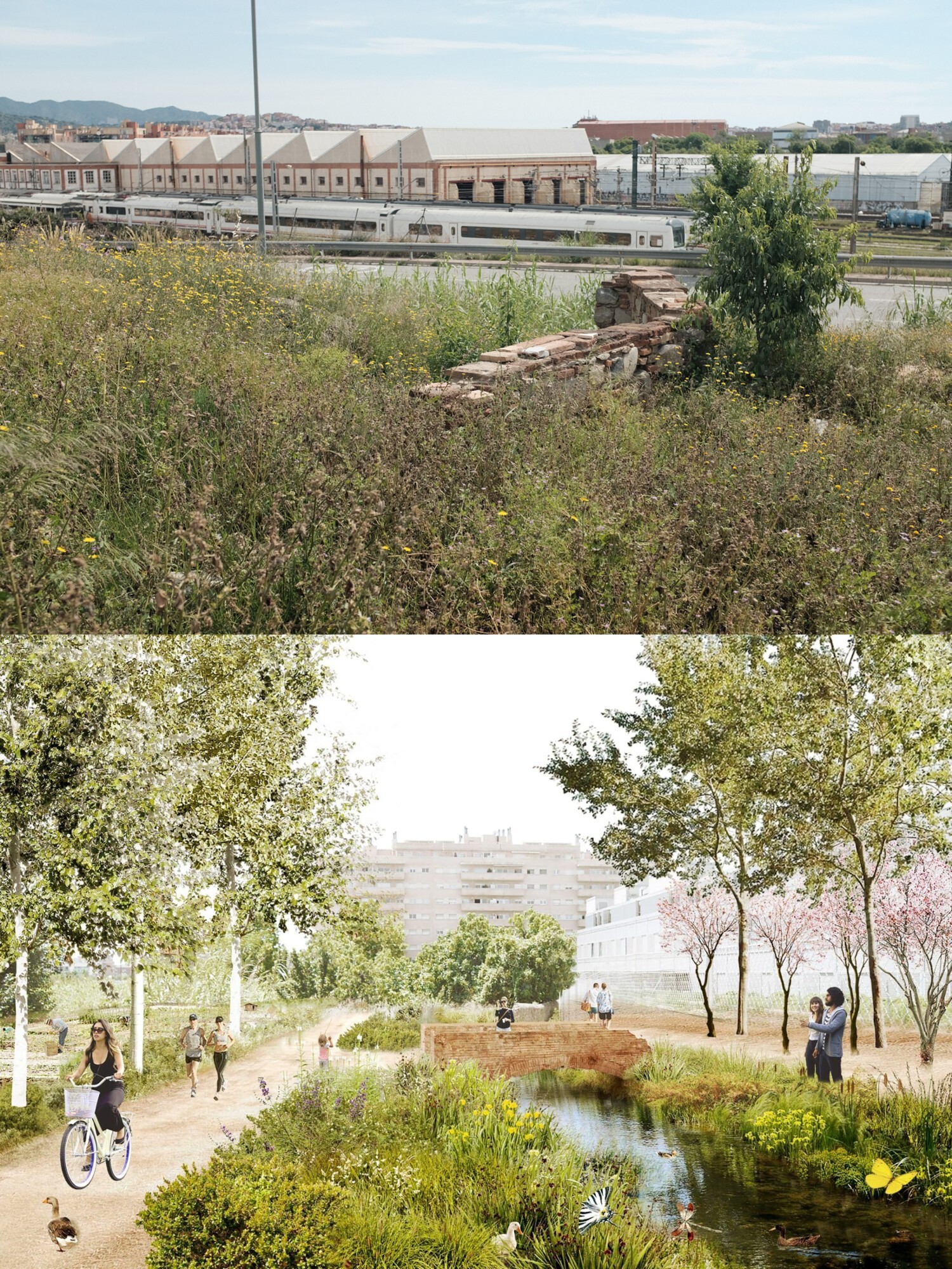
more recently, however, the rec has resurfaced; first in the domain of archaeology, where it provided a new image of the past, and then in the domain of urban planning, where its restoration promises to deliver a new ‘green infrastructure’ for the city of the future. this essay explores some of the ways in which the rec has been made visible, re-signified and projected onto barcelona’s past and future. we present four short ‘scenes’, each located in a different location along the rec’s path and eliciting a particular set of issues: its integration into the city’s official history, ambitious plans to transform it into a green corridor, and the persistence of agricultural and recreational uses dependent of free access to the rec’s water.