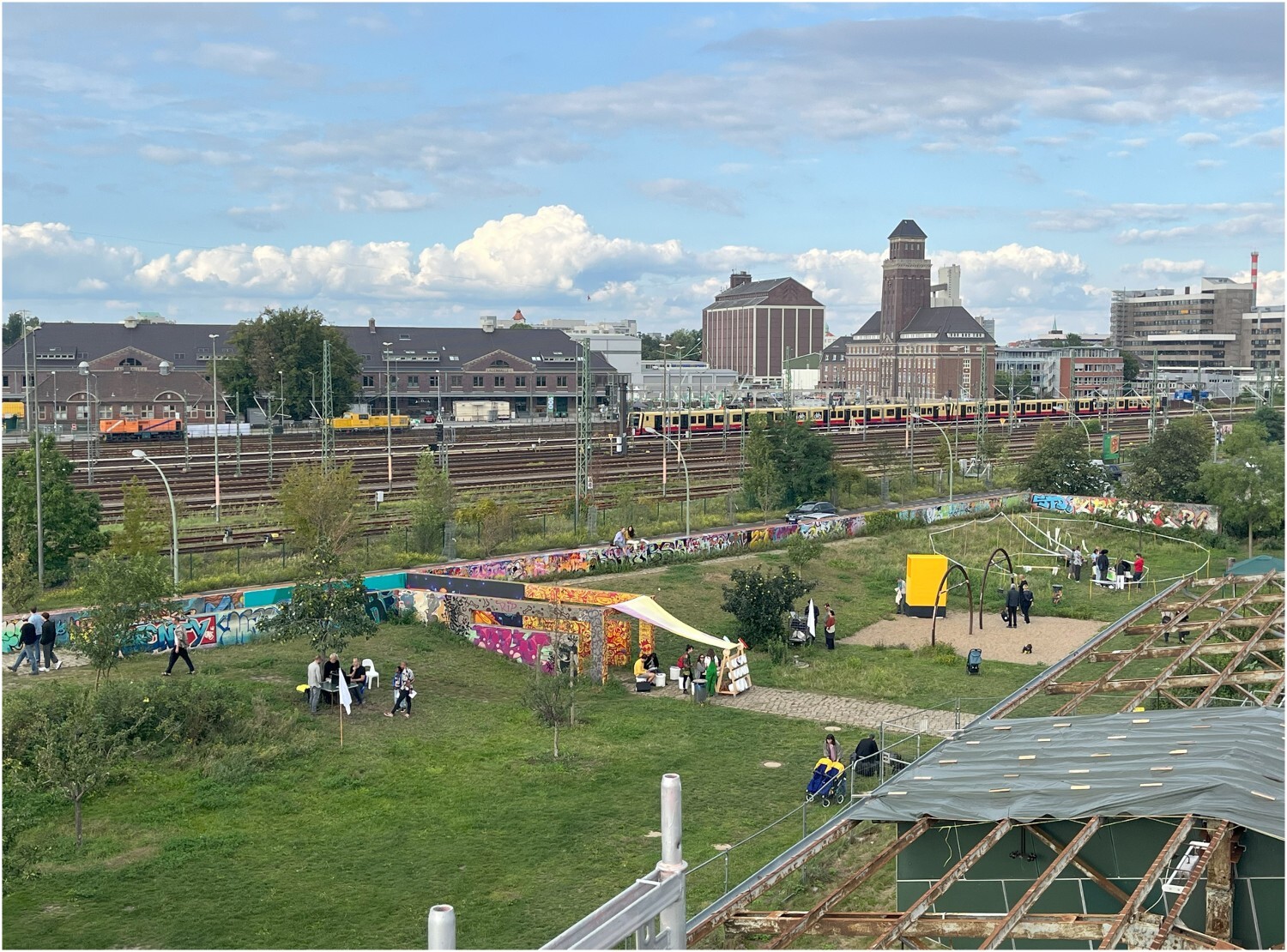
this paper presents three art-based or art-related research projects—climart, embassy of nature/overgrowth, and plaurci. these projects, implemented in germany, poland, and turkey, critically examine the role of urban plants through interdisciplinary collaboration. by integrating scientific inquiry and artistic expression, these initiatives enrich the discourse on urban climate adaptation and reimagine the future of green cities. the study of human—plant interactions in urban environments has gained prominence in the social sciences, drawing on multispecies ethnography, environmental history, and plant studies. despite increasing scholarly challenges to anthropocentric perspectives, the phenomenon of ‘plant blindness’ continues to marginalize urban flora, shaping public attitudes that oscillate between preservation and eradication. in response, artists and scholars collaborate with nature, integrating living elements into their practice to challenge conventional perceptions and cultivate environmental awareness.
Keywords:
to see plants in the city
a quiet revolution is taking place in the concrete urban landscapes: between the slabs of sidewalks, in parking lots, in the cracks of walls, in abandoned spaces, a new generation of urban plants is growing—unplanned, spontaneous, often overlooked. these green rebels are becoming an object of fascination for artists and researchers, challenging our view of the relationship between people and plants on a global urbanized planet.
despite growing scholarly and artistic interventions challenging anthropocentric dominance and expansionist politics, there is a weakening in practical ethnobotanical knowledge, a phenomenon known as ‘plant blindness’ (wandersee and schussler 1999), meaning a broader decline in interest, awareness, and recognition of plants as living organisms. this perception, reinforced by a tendency to see plants as ‘less alive’ than animals (stagg and dillon 2022), has rendered urban nature an unfamiliar and often overlooked terrain. while some individuals engage in urban foraging and green civic initiatives, others continue to conceptualize urban spaces in opposition to nature.