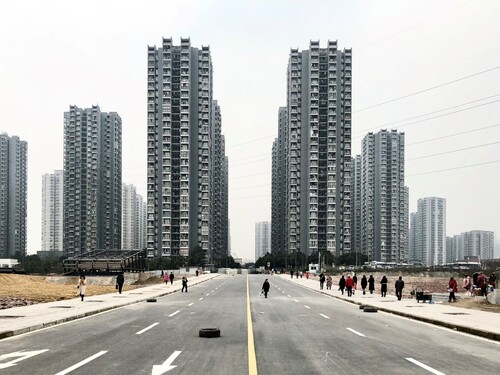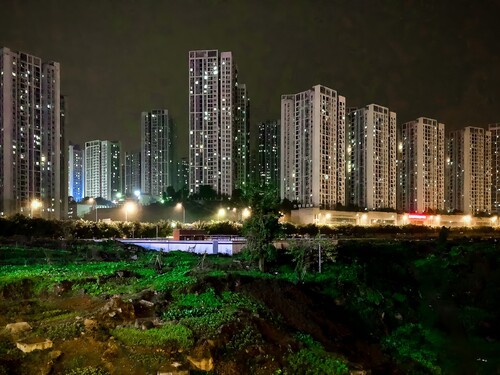
this photo essay explores the impact of the rapid expansion of public rental housing in china on the peri-urban landscape. as china tries to cope with rapid urbanisation, public rental housing has become critical in the urban landscape, especially in the sub-urban areas of major cities. the paper criticises the design and planning practices that have resulted in uniform high-rise complexes. it highlights the mismatch between the quantitative achievements in housing provision and the qualitative aspects of urban living, pointing out the lack of human scale and cultural integration in these developments. the essay also features photographs that provide visual evidence of the emerging landscape, characterised by standardised and inaccessible spaces that prioritise regulatory compliance over resident well-being. it identifies a potential future crisis in social sustainability, drawing parallels with issues encountered in western public rental housing. we argue for a shift towards a more human-centric approach, calling for planning reforms to prioritise cultural context, resident interaction, and community building.
Keywords:

introduction
over the past four decades, china’s rapid urbanisation has skyrocketed its urban population from 150 to 920 million, creating a severe housing crisis for its low-income residents in cities. the government’s previous attempts at providing affordable housing, such as low-rent housing (lianzufang 廉租房) and what was termed economically affordable housing (jingji shiyong fang 经济适用房), have not succeeded (huang 2012; tomba 2014), as the former was too scarce and the latter was exploited by middle-class individuals posing as low-income, sidelining the truly needy.
to tackle the problem, the central government has been implementing a large-scale public rental housing (gongzufang 公租房) program since 2010, that is, constructing hundreds of modern public rental housing towers in the peripheral lands of major chinese cities (hu 2023c). currently, more than 20% of low-income urban citizens residing in major chinese cities rely on this housing program (xu and luo 2021). in just a decade, these large public rental housing towers replaced the original low-density farmhouses and fields, becoming an emerging peri-urban landscape of chinese cities.