this essay lays out two linked initiatives piloted in a london borough that used creative and community-led methods to explore and evidence violence affecting young people, enabling its prevention and transformation. the first initiative was a youth forum series co-designed with professional artists working in a range of mediums. the second was a proposal to develop a living ‘sensory archive’, an all-digital, participatory, qualitative evidence base documenting what violence affecting young people looked, sounded, and felt like. many forms of violence that young people experience are structural and chronic: stigma, suspicion, exclusion, adultification, deprivation, neglect, and more. despite the harm these forms of violence cause, crime statistics often fail to track them. this is because legal systems for reporting harm may be unable to make sense of how children and young people talk about their experiences. consequently, the criminal justice system offers inadequate remedy, protection, or deterrence. the youth forum and the sensory archive, which the mayor of london recognised as city-wide models of practice, show how arts-based methods provide alternative ways to document and share violence that is traditionally hard to capture. these methods reveal pathways for communities, organisations, and services to work together to reduce harm, prevent its recurrence, and repair the damage. in 2024, the local authority changed its priorities and cut the budget for the youth forum and the sensory archive. nonetheless, the multimedia documentation of the forum and the approach staked out in the archive proposal can still inform practice.
Keywords:

introduction: at a loss for words
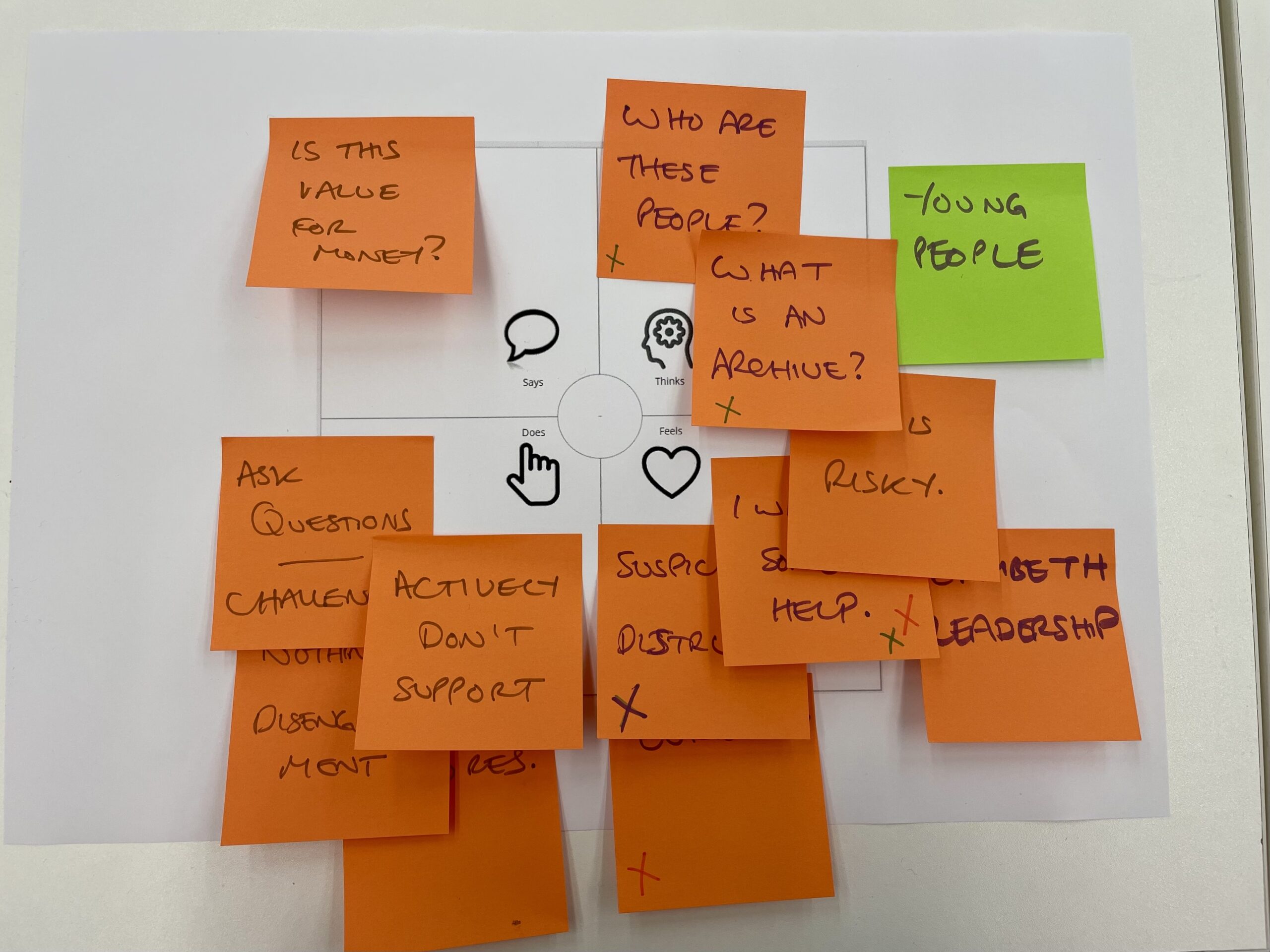
many forms of violence that young people experience are structural and chronic. unlike direct person-to-person violence, structural violence—including stigma, suspicion, exclusion, adultification, deprivation, neglect, and more—may be legal. that legality is part of what makes structural violence hard to track and quantify (nixon 2011). it inhibits the compilation of evidence to define this violence, determine how prevalent it is, and understand what has been done and could be done about it. in addition, mechanisms to report crime usually require reporters to specify what happened to them, but young people may use words like ‘weird’, ‘uncomfortable’, or ‘not okay’ to describe their experiences.
between 2023 and 2024, ariana was contracted by a london local authority to manage community engagement in pursuit of a safer borough. abbie worked, and still works, for the same council as the project manager of an initiative on the social determinants of health. as part of ariana’s role, she developed a youth forum series to centre and celebrate young people’s expertise in preventing the violence that affected their lives. each forum had a different dynamic, but all of them were co-facilitated and co-designed by artists, with involvement from a youth councillor nominated by her peers to chair the forum.