Editorial note on the video release
-ulises moreno-tabarez
We are publishing the videos from this series in their current form. They were produced collectively as a community based documentary, with the work of students and local volunteers who wanted this event to be visible beyond the town, while still speaking first to local audiences. The current cut is in Spanish and it has been approved by local authorities. We recognise that the material would benefit from further, more professional editing, and we will continue working on future editions using the full body of material gathered through the Coastal Commons project funded by the Urban Studies Foundation, grant reference USF SSA 230311.
by Keila martínez Martínez y Miguel ángel liborio macedo, edited and published by the coastal commons editorial team.
Across generations, communities carry historical wounds and social fractures that change shape but do not simply disappear. The legacies of colonialism and slavery, alongside other forms of dispossession and enforced hierarchy, leave marks that continue to structure everyday life, from social relations to local politics and economic opportunity. These inheritances do not remain in the past, they travel forward, settling into contemporary dynamics, and sometimes resurfacing as tensions within families, neighbourhoods, and institutions.
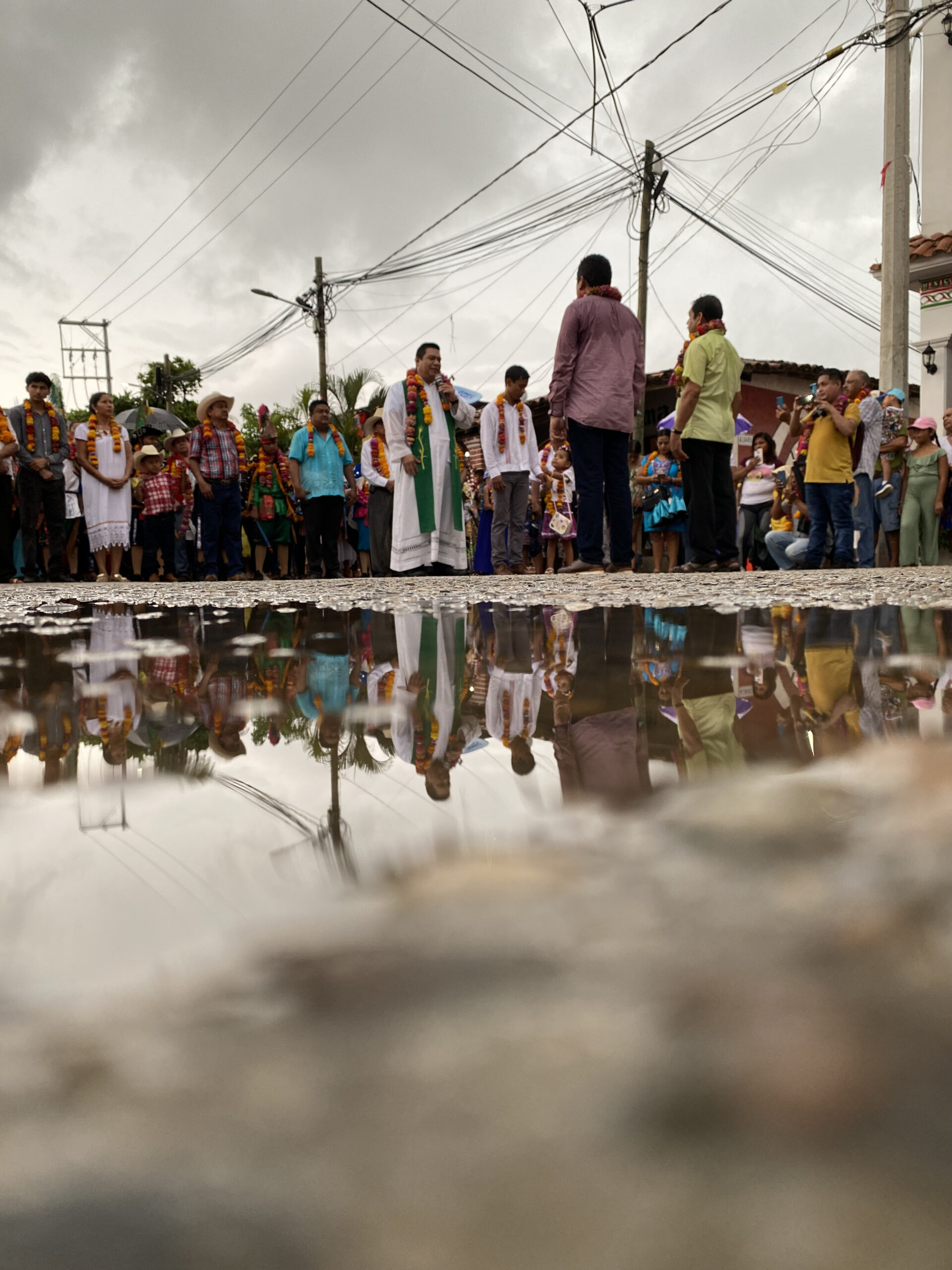
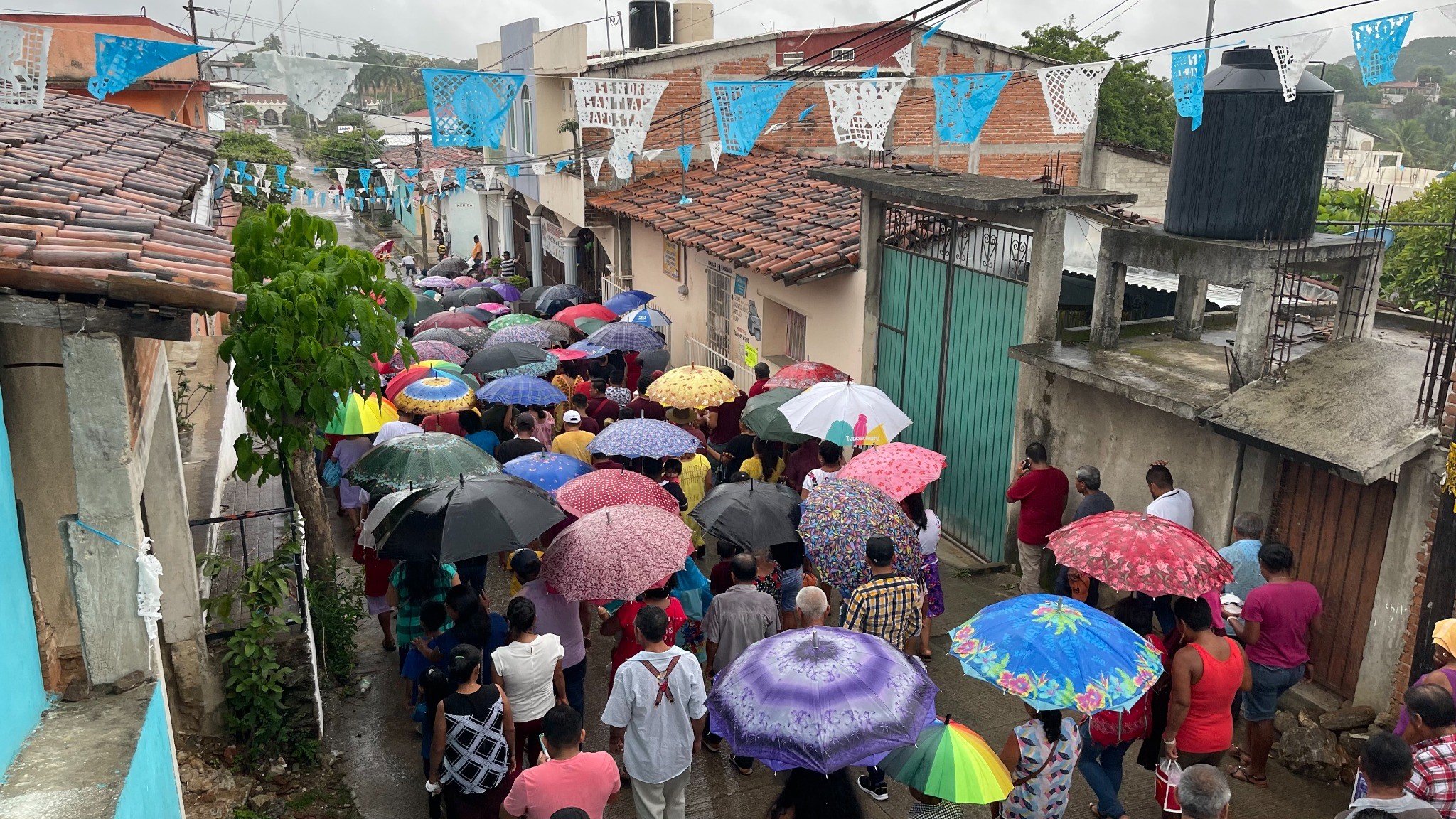
In that longer terrain, practices of reconciliation matter, not as symbolic gestures detached from reality, but as lived civic methods. In Azoyú, Guerrero, healing begins from within the community through La Llorada, a tradition that brings people together each year on 6 October. The ceremony includes solemn processions accompanied by brass bands, long embraces, the exchange of flower garlands, and words that name what is being sought, forgiveness and forgetting, spoken as “perdón” and “olvido” in response to harms and offences.
In a world where grievances accumulate and apologies can remain unspoken, La Llorada insists on another rhythm. It is not a superficial performance. It is a collective act of vulnerability, a ritual where tears become a language of remorse and flowers become an offer of peace. It reminds us that the strength of a community does not come from the absence of conflict, but from the capacity to face conflict, to speak it, and to forgive in order to continue living together.
The celebration is organised through a system of mayordomías and through committees that uphold traditions and customs in both the western and the eastern neighbourhoods. In some parts of the festivities these groups work together, in others they work separately, but always with the same purpose, to preserve the tradition and ensure its transmission across generations. What makes this organisation compelling is not only its continuity, but the way it mobilises collective labour and responsibility as a form of social cohesion.
During the Coastal Commons project we collaborated with the community and presented the results of the video produced about La Llorada, which takes place each October. We met on various occasions with members of the casa ejidal to talk through the project and agree the date for presenting the material. Invitations were delivered, and a small convivio was organised as a gesture of gratitude for the hospitality and collaboration we received.
During the screening, those present shared feedback for a revised edit and expressed interest in a future presentation. Alongside this, an agreement was made to translate the material into Me’phaa, also known as Tlapaneco, for its next circulation. We will collaborate in this process with the Universidad Autónoma de Guerrero, particularly colleagues in Sociology, to strengthen the educational dimension of the project and to foreground the community processes that give life to this tradition.
In this way, La Llorada can be understood not only as a reconciliation ritual, but as a space of collective learning, historical memory, and community making. Sharing the film now, as it currently stands, is part of that commitment, to return the material to the community, to make it available to wider publics, and to keep working carefully and collaboratively on what this story can become.
Proyecto y apoyo
Coastal Commons, financiado por la Urban Studies Foundation, referencia de apoyo USF SSA 230311, en colaboración con la Universidad Autónoma de Guerrero.
Créditos
Participantes comunitarios, mayordomías y comités locales de tradiciones y costumbres, gracias por su hospitalidad, orientación y autorización para compartir este trabajo.
Filmación y edición: Miguel Liborio Macedo and Ulises Moreno-Tabarez Cámara y sonido: Cecilia Ruz, Heidy Maciel, Ulises Moreno-Tabarez, Marilú Herrera, Fatima Cardenares, Keila Martínez, Concepción López, and Eduardo Hernández.
Traducción y subtítulos: Miguel Liborio Macedo
Lugar
Azoyú, Costa Chica, Guerrero, México