this photo essay puts forth the idea that urban informality in china’s peri-urban areas is fundamentally a struggle over temporality. through ethnographic accounts of tuji jianfang (sudden builds) in beijing, where property owners rapidly construct structures to meet state-imposed relocation deadlines, and the evolving night markets landscape in dushuhu higher education town, suzhou, where vendors negotiate operating hours with urban management, the paper reveals how marginalized groups assert agency through temporal tactics. these observations demonstrate how informal actors assert their place in the city by exploiting temporal gaps and adapting rhythms. by foregrounding temporality, this article enriches our understanding of urban change, agency, and power dynamics, advocating for urban imaginations that acknowledge the lived rhythms of informal urban life.
Keywords:

introduction
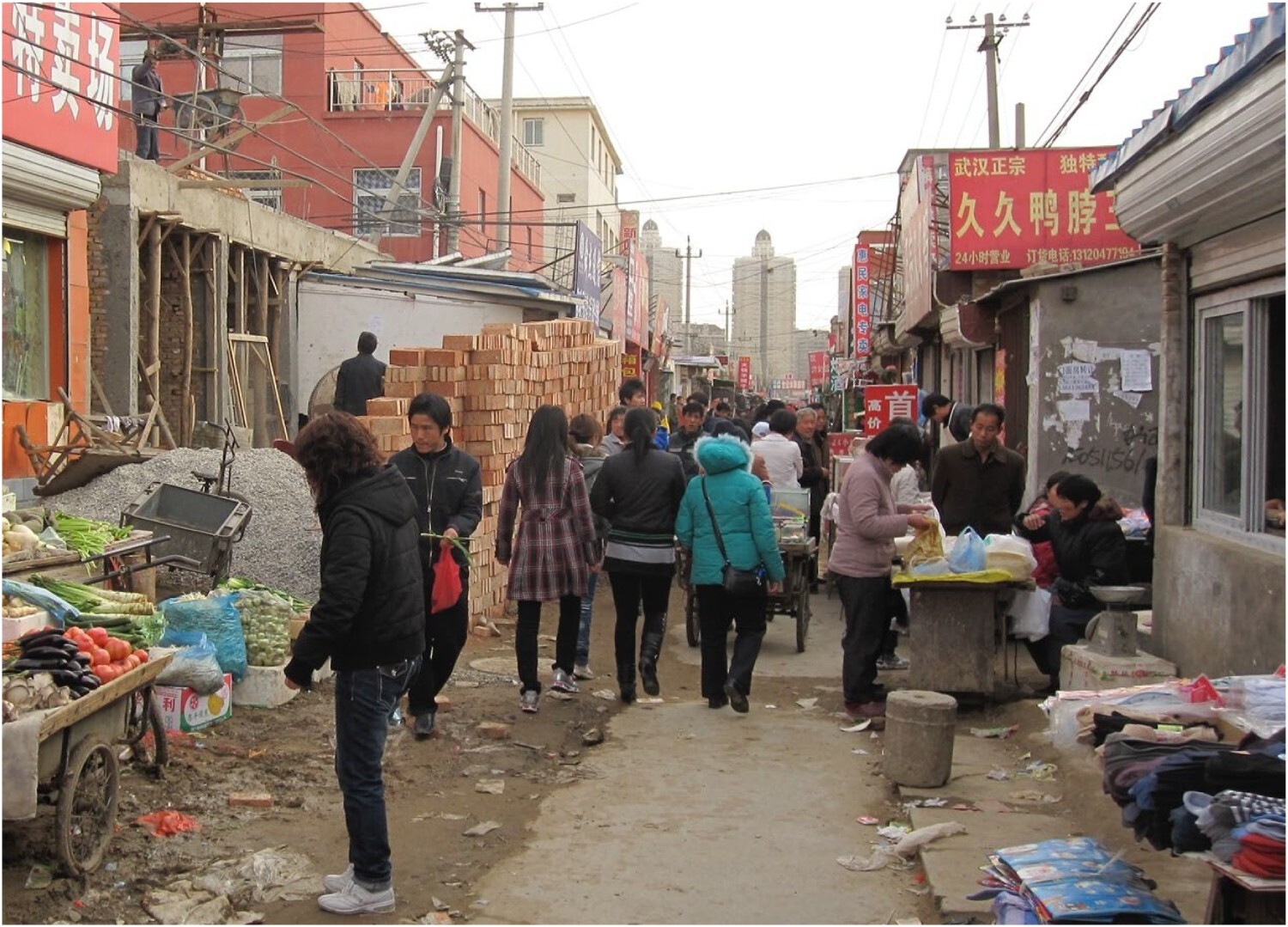
in the sprawling peripheries of china’s mega-cities, where the asphalt ribbons of urban expansion fray into fragmented farmlands and informal settlements, a unique urban tapestry unfolds. these peri-urban areas—often referred in state documents as chengxiang jiehebu (城乡结合部)—defy neat categorization, appearing chaotic to the uninitiated eye, a seemingly haphazard jumble of makeshift structures, bustling markets, and transient populations.
yet, beneath the surface of seemingly unregulated growth lies a vibrant realm of urban informality, teeming with spontaneous adaptations, resourceful innovations, and remarkable grassroots creativity. here, makeshift structures rise with astonishing speed, defying conventional planning timelines, and twilight transforms forgotten corners into bustling marketplaces that pulse with a life independent of official operating hours, revealing an urban existence lived dynamically beyond government blueprints and rigid regulations.