this piece documents the struggle of el árbol, an informal settlement that emerged between 2009 and 2014 in santiago de cali, colombia, where families displaced by violence and poverty transformed an abandoned plot of land into a collective home. through practices of spatial appropriation, grassroots organization, and political resistance, its inhabitants confronted forced evictions, militarization, and persistent stigmatization, responding with community labor and collective mobilization.
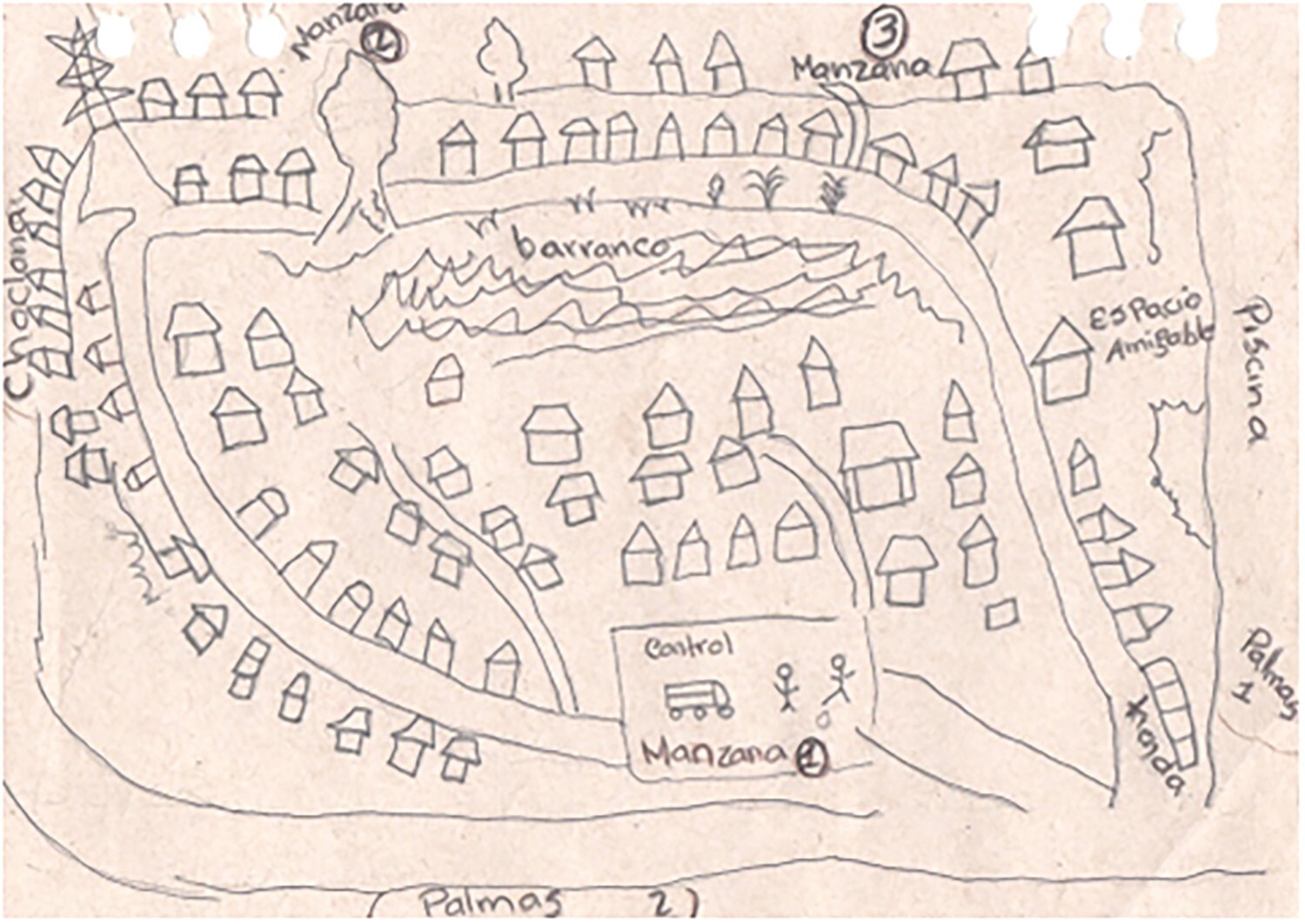
grounded in a qualitative ethnographic strategy, the study employs two key participatory methodologies: the collection of oral testimonies and the co-construction of community maps. in-depth interviews and life histories with residents helped reconstruct memories of forced displacement, the processes of territorial appropriation, and the formation of grassroots collective organization from an embedded perspective. in parallel, participatory mapping workshops were conducted to collaboratively design maps that reflect the settlement’s evolution, the places of symbolic significance, and the key milestones of the urban conflict.
framed within the perspectives of political ethnography and critical urban studies, this narrative contributes to ongoing debates on urban informality, spatial justice, and the right to the city by highlighting the agency of those who reshape urban space from below. the case of el árbol demonstrates how memory, identity, and everyday practices reconfigure the city from its margins and reveal legitimate ways of producing urban space through resistance, future-making, and hope.
Keywords:
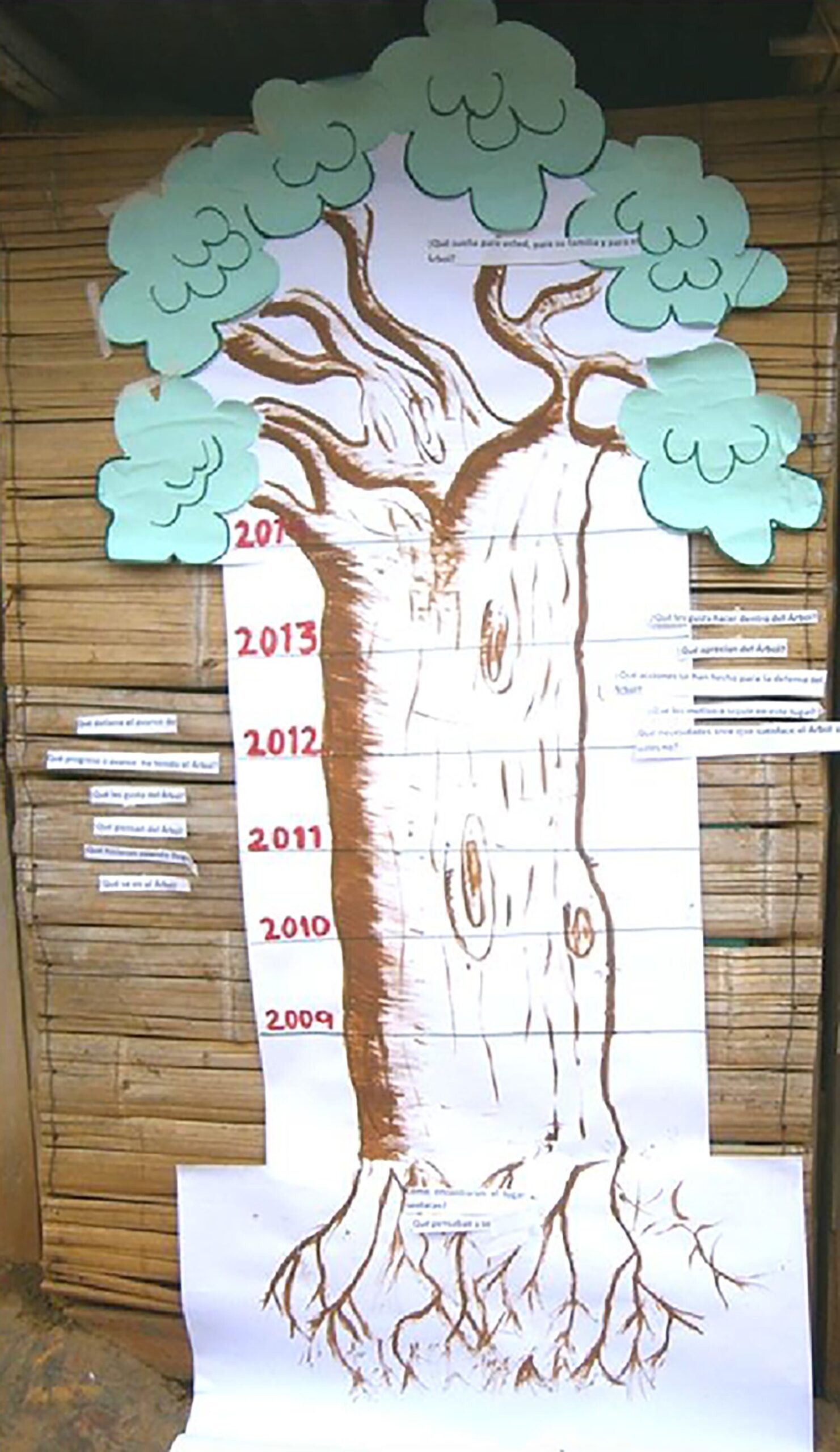
we are el árbol: struggles for land and community in the periphery of cali
we present the key moments in the socio-historical trajectory of el árbol, an informal settlement in santiago de cali, colombia, emphasizing the dynamics of spatial appropriation, social organization, and political resistance. the inhabitants represent their experiences, spatial positioning, and life meanings through a visual process of reconstruction involving drawings and representations. these expressions emerge in response to displacement, eviction, and stigmatization, while forging a collective home. by analyzing these moments, we offer a perspective on the intersections of urban informality, community mobilization, and spatial justice.